Most of the headlines about lion’s mane (Hericium erinaceus) come from trials in older adults with memory complaints. A smaller set of studies asked different questions in different people: does a single dose change how fast healthy young adults complete a task, does a month of use change stress, and does two months of use change mood and sleep in adults with overweight or obesity [1][2][3]. The answers are mixed and the studies are small. This page goes through what each one measured, including the findings that came out null, and why a 2025 systematic review is more cautious than its own conclusion sounds [4].
Key Takeaways
- In a trial of 41 healthy adults aged 18 to 45, 1.8 g of lion’s mane produced faster Stroop task performance 60 minutes after a single dose (p = 0.005), and only a trend toward lower subjective stress after 28 days (p = 0.051) [1].
- A crossover study found 1 g of lion’s mane improved reaction time on the N-Back task and Serial 7s attempts, but the placebo condition also improved focus and concentration at 1 hour [2].
- In 77 adults with overweight or obesity on a low-calorie diet, 8 weeks of lion’s mane was followed by lower depression, anxiety and sleep disorder scores, and higher pro-BDNF but no change in BDNF [3].
- The authors of the young-adult trial reported null and limited negative findings and called their results tentative given the small sample [1].
- None of these studies shows that lion’s mane treats a mood, sleep or weight condition. Side effects were commonly unreported in the literature reviewed in 2025 [4].
Why Look Beyond Memory Trials
The authors of the young-adult pilot trial opened with a point about the existing evidence: much of the human research on lion’s mane has concentrated on chronic supplementation in cognitively compromised groups [1]. That leaves open what happens in people with no memory problem, and what a single dose does as opposed to months of use.
The three studies below answer those questions in different ways, and they differ a lot in design. Reading the design before the result is the best way to judge each one.
Healthy Young Adults: One Dose and 28 Days
The first is a randomized, double-blind, placebo-controlled, parallel-groups pilot in 41 healthy adults aged 18 to 45 [1]. Participants took 1.8 g of Hericium erinaceus, and researchers tested them 60 minutes after the first dose (acute effects) and again after a 28-day intervention (chronic effects).
The acute result was that participants performed the Stroop task more quickly an hour after the dose (p = 0.005). After 28 days, subjective stress showed a trend toward being lower (p = 0.051), which is above the conventional 0.05 cutoff and so was reported as a trend [1].

The authors were direct about the limits. They wrote that null and limited negative findings were also observed, that the findings tentatively suggest faster performance and lower subjective stress in healthy young adults, and that the small sample means the results should be interpreted with caution. A pilot of this size is useful for planning a larger trial, not for settling the question.
A Crossover Study With a Placebo Response
A randomized, double-blind, placebo-controlled crossover study compared a single dose of 650 mg guayusa extract, 1 g of Nordic-grown lion’s mane, and placebo, with each participant attending three testing visits [2]. Performance was measured on Go/No-go, N-Back and Serial 7s tasks at baseline and again 1 and 2 hours after ingestion.
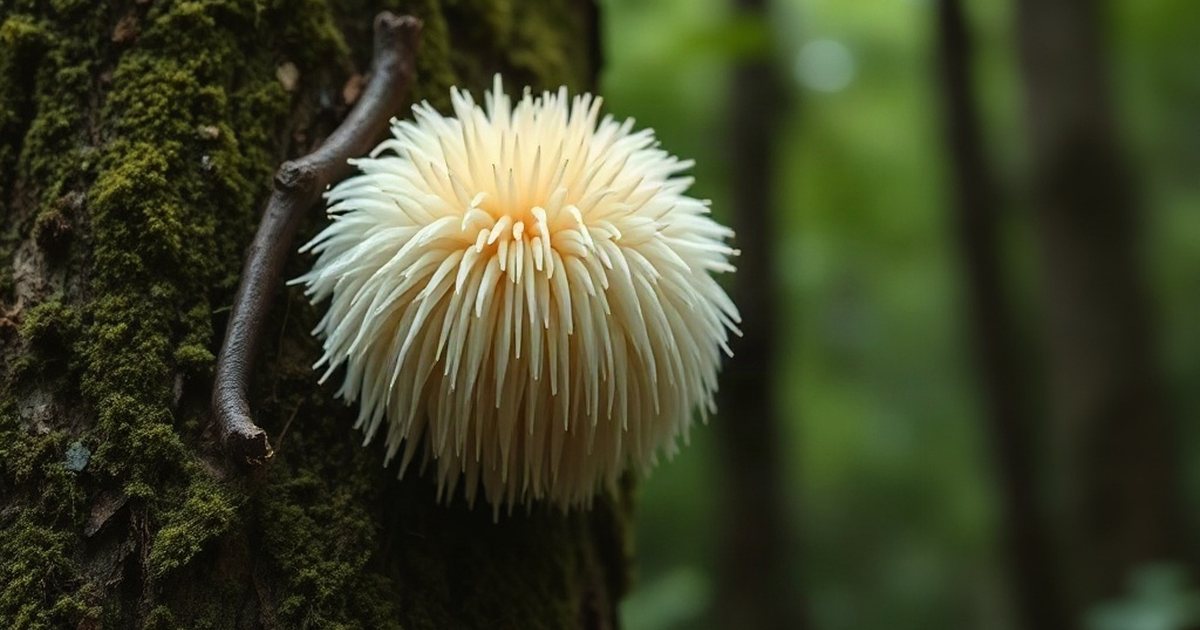
Lion’s mane improved the number of attempts on Serial 7s, reaction time on the N-Back task and reaction time to Go stimuli (all p of 0.05 or lower). The guayusa extract improved more measures, including mental clarity, focus and mood, and it uniquely raised blood pressure. Both active products improved ratings of happiness compared with peers, and in lion’s mane that effect appeared earlier, at one hour [2].
The detail worth noting is that the placebo condition also improved focus and concentration at one hour compared with baseline (p of 0.05 or lower) [2]. That is a reminder that repeated testing and expectation can lift scores by themselves, which is why the comparison with placebo, and not the change from baseline, is the figure to look for. The published summary does not state the number of participants.
Overweight and Obesity: Mood, Sleep and BDNF
In a study of 77 volunteers with overweight or obesity, all following a low-calorie diet, recruitment required a mood disorder, a sleep disorder or binge eating on self-assessment questionnaires [3]. After 8 weeks of lion’s mane supplementation, depression, anxiety and sleep disorder scores had decreased, and the authors concluded that mood disorders of a depressive-anxious nature and the quality of nighttime rest improved.
The study also tracked brain-derived neurotrophic factor (BDNF) and its precursor, pro-BDNF, as possible biomarkers. Pro-BDNF rose after supplementation, while circulating BDNF did not change significantly [3].
Three points limit how far this goes. The volunteers were all on a calorie-restricted diet, a change that could itself influence mood and sleep. The summary does not describe a placebo group. And the biomarker result is only partly supportive: the protein that rose is the precursor, and mature BDNF did not change significantly.
A Cognitive Trial That Moved One Test
For contrast, a randomized, double-blind, placebo-controlled trial of supplements containing lion’s mane fruiting body ran for 12 weeks and used three cognitive tests: the Mini-Mental State Examination (MMSE), the Benton visual retention test and a verbal paired-associate learning test [5]. The authors reported that the MMSE alone showed a significant improvement and prevented deterioration in the treated group.
Only one of three tests moved, and the published summary gives no sample size or participant description. The authors call oral intake a safe and convenient method for dementia prevention, which is a larger claim than a one-test result in a single trial can carry.
How the 2025 Systematic Review Frames It
A 2025 systematic review searched PubMed for studies published from January 2000 to June 2024 and included five randomized trials, three pilot clinical trials, 15 laboratory studies, one cohort study, one case report and one computer analysis [4]. Mini-Mental State Examination scores from one randomized trial and one pilot trial showed a combined weighted mean increase of 1.17 in the intervention group.


The review’s discussion says lion’s mane is effective for neuroprotection, cognition, cancer prevention and gut health. The evidence it describes for cancer, however, comes from laboratory studies on cells, and the clinical evidence it summarizes is cognitive and mood-related. Its own list of possible side effects, though commonly unreported, includes stomach discomfort, headache and allergic reactions [4].
In other words, the review supports the existence of a small, early body of human trials and flags that safety reporting is thin. It does not support a leap from cell studies to claims about preventing disease.
Bottom Line
Beyond the memory trials, the human evidence for lion’s mane is a handful of small studies: a 41-person pilot in healthy adults with a faster Stroop response after one 1.8 g dose and a statistical trend for lower stress at 28 days, a crossover study where placebo also improved focus, and a 77-person study in overweight adults reporting lower depression, anxiety and sleep disorder scores after 8 weeks. The authors themselves describe the findings as tentative. Safety reporting is thin, and the evidence does not show that lion’s mane treats a mood, sleep or cognitive condition.
Frequently Asked Questions
Does lion’s mane reduce stress in healthy adults?
Only tentatively. In a 41-person pilot trial using 1.8 g of Hericium erinaceus, subjective stress showed a trend toward being lower after 28 days (p = 0.051), which did not reach the usual significance cutoff. The authors reported null and limited negative findings and asked for larger trials.
Does lion’s mane work right after taking it?
One trial found faster Stroop task performance 60 minutes after a single 1.8 g dose, and another found faster N-Back reaction time after 1 g. In the second study the placebo also improved focus and concentration at one hour, so some of the change may reflect testing and expectation.
What side effects has lion’s mane been linked to?
A 2025 systematic review notes that side effects are commonly unreported but may include stomach discomfort, headache and allergic reactions. If you have a mushroom allergy or take regular medication, talk with your clinician before using it.
References
- Docherty S, et al. The Acute and Chronic Effects of Lion’s Mane Mushroom Supplementation on Cognitive Function, Stress and Mood in Young Adults: A Double-Blind, Parallel Groups, Pilot Study. Nutrients (2023). PMID 38004235
- La Monica MB, et al. Acute Effects of Naturally Occurring Guayusa Tea and Nordic Lion’s Mane Extracts on Cognitive Performance. Nutrients (2023). PMID 38140277
- Vigna L, et al. Hericium erinaceus Improves Mood and Sleep Disorders in Patients Affected by Overweight or Obesity: Could Circulating Pro-BDNF and BDNF Be Potential Biomarkers? Evidence-Based Complementary and Alternative Medicine (2019). PMID 31118969
- Menon A, et al. Benefits, side effects, and uses of Hericium erinaceus as a supplement: a systematic review. Frontiers in Nutrition (2025). PMID 40959699
- Saitsu Y, et al. Improvement of cognitive functions by oral intake of Hericium erinaceus. Biomedical Research (2019). PMID 31413233
These statements have not been evaluated by the FDA. This product is not intended to diagnose, treat, cure, or prevent any disease.
These statements have not been evaluated by the Food and Drug Administration. This information is not intended to diagnose, treat, cure, or prevent any disease. Content is for informational purposes only and is not medical advice; consult a qualified healthcare provider before starting any supplement. As an Amazon Associate we earn from qualifying purchases.