Navigating perimenopause often brings a range of changes, and shifts in cognitive function are a common concern for many women. As interest in natural approaches grows, lion’s mane mushroom (Hericium erinaceus) and Bacopa monnieri are two botanicals frequently discussed for their potential to support brain health.
This article will explore the current understanding of lion’s mane and Bacopa monnieri, specifically examining their potential roles in cognitive enhancement during perimenopause. We will rely solely on available research to provide a balanced and realistic overview, helping you understand what the evidence suggests for each.
Understanding Cognitive Changes in Perimenopause
Perimenopause is a transitional phase leading to menopause, characterized by fluctuating hormone levels, particularly estrogen. These hormonal shifts are thought to influence various bodily systems, including the brain. Many women report experiencing ‘brain fog,’ memory issues, or difficulty concentrating during this time.
While these cognitive changes can be frustrating, they are often a normal part of the perimenopausal transition. Factors beyond hormones, such as sleep disturbances, stress, and other health conditions, can also contribute to perceived cognitive changes in midlife women [1].
Lion’s Mane Mushroom: What the Evidence Suggests
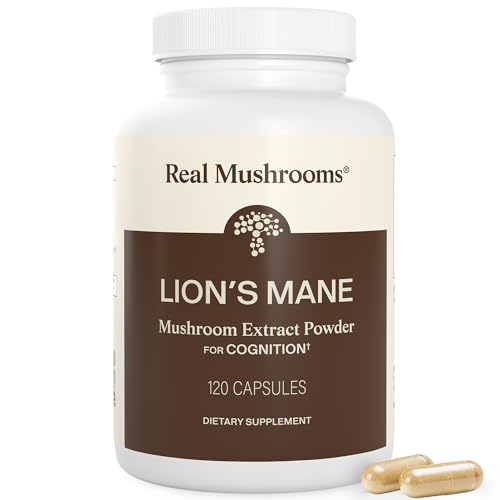
Lion’s mane mushroom is a culinary and medicinal fungus that has gained attention for its potential neurotrophic properties. It contains compounds like hericenones and erinacines, which are being investigated for their effects on nerve growth factor (NGF) synthesis.
Research specifically on lion’s mane and perimenopausal cognitive function is still emerging. While some studies have explored its impact on cognition in other populations, direct, high-quality human trials focusing on perimenopausal women are limited. The broader field of plant-based therapeutics in women’s reproductive health is an area of ongoing investigation [2]. Therefore, while promising, more targeted research is needed to draw definitive conclusions about its efficacy for cognitive enhancement in perimenopause.
It’s important to note that the overall neurobiology of plant-based therapeutics in women’s reproductive health is an active area of research, with scientists exploring mechanisms, efficacy, and clinical translation [2].
Bacopa Monnieri: An Overview of Research
Bacopa monnieri, an herb traditionally used in Ayurvedic medicine, is often studied for its adaptogenic and cognitive-enhancing properties. Its active compounds, bacosides, are believed to influence neurotransmitter systems and neuronal communication.
Similar to lion’s mane, robust human clinical trials specifically investigating Bacopa monnieri’s effects on cognitive function in perimenopausal women are not extensively available in the research cited here. While Bacopa has been studied for general cognitive enhancement, caution is warranted when extrapolating findings directly to the unique physiological context of perimenopause. The broader understanding of natural strategies to optimize health in aging women is an area of ongoing scientific interest [3].
More broadly, the field of plant-based therapeutics is being examined for its potential in women’s reproductive health, looking at mechanisms and efficacy [2]. However, specific findings on Bacopa for perimenopausal cognition within the research cited here are not detailed.
Lion’s Mane vs. Bacopa: A Comparative Perspective for Perimenopause
When comparing lion’s mane vs. Bacopa monnieri for cognitive enhancement in perimenopause, it’s crucial to acknowledge the current limitations in specific research. Both botanicals show potential in broader cognitive research, but direct comparative studies or extensive trials focused solely on perimenopausal women are not well-established in the research cited here.
The mechanisms of action for lion’s mane are thought to involve NGF support, while Bacopa is believed to modulate neurotransmitters and neuronal plasticity. These distinct pathways suggest they could potentially offer different types of support, but this is theoretical without specific comparative perimenopausal data. Other compounds, such as creatine, are being investigated for their potential effects on cognition in perimenopausal and menopausal women [4][5]. Iron supplementation is also considered for cognitive function in peri- and postmenopausal women [1].
At present, without direct comparative studies on perimenopausal women, it is not possible to definitively state which is ‘better.’ The choice, if considered, would likely depend on individual responses and preferences, in consultation with a healthcare provider. The general neurobiology of plant-based therapeutics in women’s reproductive health is a complex and evolving field [2].
References
- Cognitive Function in Peri- and Postmenopausal Women: Implications for Considering Iron Supplementation. Nutrients, 2025
- The neurobiology of plant-based therapeutics in women’s reproductive health: mechanisms, efficacy, and clinical translation. Frontiers in nutrition, 2025
- Natural strategies to optimize estrogen levels in aging women: mini review. Frontiers in aging, 2025
- The Effects of 8-Week Creatine Hydrochloride and Creatine Ethyl Ester Supplementation on Cognition, Clinical Outcomes, and Brain Creatine Levels in Perimenopausal and Menopausal Women (CONCRET-MENOPA): A Randomized Controlled Trial. Journal of the American Nutrition Association, 2026
- Creatine in women’s health: bridging the gap from menstruation through pregnancy to menopause. Journal of the International Society of Sports Nutrition, 2025
These statements have not been evaluated by the Food and Drug Administration. This information is not intended to diagnose, treat, cure, or prevent any disease. Content is for informational purposes only and is not medical advice; consult a qualified healthcare provider before starting any supplement. As an Amazon Associate we earn from qualifying purchases.