If a doctor mentions attention deficit disorder to a woman in her mid-40s who is newly struggling to finish a sentence, hold a thought during a meeting, or stop losing her keys, it is usually framed as adult ADHD diagnosed late. It is worth saying plainly: perimenopause and adult ADHD can look almost identical on the surface, distractibility, working-memory slips, difficulty starting tasks, and the honest answer is that nobody has run a clinical trial testing lion’s mane specifically in either population for this exact symptom cluster. This article covers what the actual evidence does and does not say.
This site participates in the Amazon Associates program and may earn a commission on qualifying purchases. Nothing here has been evaluated by the FDA.
Key Takeaways
- No clinical trial has tested lion’s mane in people with an ADHD diagnosis, in midlife or otherwise; the interest is mechanistic, not evidence-based yet.
- Lion’s mane extract is one of the few natural compounds shown to upregulate nerve growth factor (NGF) gene expression in human astrocytoma cells, the biological rationale behind the attention claims [1].
- A 12-week randomized trial in older adults found lion’s mane significantly improved Mini Mental State Examination scores versus placebo, though that test screens for broad cognitive decline, not attention specifically [2].
- Perimenopausal brain fog and adult ADHD share several surface symptoms but have different underlying drivers (estrogen fluctuation versus dopamine/norepinephrine regulation), so what helps one may not help the other.
- Lion’s mane is not a substitute for stimulant medication, therapy, or a formal ADHD evaluation if attention problems are new, worsening, or affecting work and safety.
Why the ADHD Comparison Comes Up at All
Perimenopause brings a specific kind of cognitive change that women often describe using ADHD language: losing the thread of a conversation, rereading the same paragraph, forgetting why they walked into a room. Estrogen receptors are dense in the prefrontal cortex and hippocampus, the same regions implicated in executive function and working memory in ADHD research. When estrogen fluctuates sharply during the menopause transition, executive function can wobble in ways that feel identical to inattentive-type ADHD, even in women with no childhood history of it.
That symptom overlap is exactly why lion’s mane, already marketed heavily for brain fog, has picked up ADHD-adjacent marketing. The mushroom has never been tested in a trial that used ADHD diagnostic criteria or standardized attention batteries like the Conners or CPT-II. Every claim connecting the two is an inference from separate bodies of research, not a direct finding.
What the NGF Mechanism Actually Shows
The biological argument starts with nerve growth factor. A 2008 laboratory study found that ethanol extracts of Hericium erinaceus, out of four edible mushrooms tested, were uniquely able to promote NGF gene expression in human astrocytoma cells, and the same research group saw increased NGF mRNA in the hippocampus of mice fed lion’s mane powder for a week [1]. NGF supports the growth, maintenance, and survival of neurons, particularly cholinergic neurons involved in attention and memory circuits.
That is a real and interesting mechanism. It is also a long way from proving lion’s mane changes attention span in a living, distracted, sleep-deprived 47-year-old. NGF studies establish plausibility, not clinical effect.
What Human Cognitive Trials Have Actually Measured
The best-known human trial ran for 12 weeks in older adults with mild cognitive impairment, using three standardized tests: the Mini Mental State Examination (MMSE), the Benton visual retention test, and a verbal paired-associate learning test. Only the MMSE showed a significant improvement over placebo [2]. The MMSE is a broad screening tool for cognitive decline, orientation, recall, attention and calculation combined, not a validated attention-deficit measure. A newer 2025 crossover study in healthy adults under 35 found no significant effect on composite cognition or mood after a single dose, with only one individual motor-speed test showing improvement. Neither trial enrolled anyone with an ADHD diagnosis or measured attention the way ADHD research does.
Where This Leaves a Midlife Woman Considering It
If new attention problems, missed deadlines, forgotten appointments, difficulty following multi-step conversations, are showing up alongside other perimenopause symptoms like hot flashes, sleep disruption, or mood shifts, that pattern points toward hormonal cognitive change, and lion’s mane sits in a reasonable evidence tier for general brain-fog support. If the attention problems predate perimenopause, or a childhood or young-adult history of similar struggles exists, that is a different clinical picture worth raising with a doctor directly rather than self-treating with a supplement marketed on mechanism alone.
Practical Takeaway
Lion’s mane is reasonable to try as one piece of a broader perimenopause cognitive-support routine, sleep, stress management, and in some cases hormone therapy discussed with a doctor, alongside it. It should not be framed or purchased as an ADHD treatment, because that specific claim has not been tested.
Frequently Asked Questions
Can lion’s mane replace ADHD medication?
No. There is no trial evidence it affects ADHD symptoms at all, and stimulant or non-stimulant ADHD medications have a substantially larger, better-designed evidence base for that specific condition.
Is perimenopausal brain fog the same as ADHD?
They can look similar from the inside but have different biological drivers. A clinician can help distinguish them, which matters because the effective treatments differ.
How long does it take to notice an effect on focus?
Human trials that found any benefit used continuous dosing for 8 to 12 weeks; single-dose effects in younger adults were minimal and task-specific.
Is it safe to combine lion’s mane with ADHD medication?
There is no known dangerous interaction, but any supplement added to an existing medication regimen should be run past the prescribing doctor first.
What should I look for in a lion’s mane supplement for cognitive support?
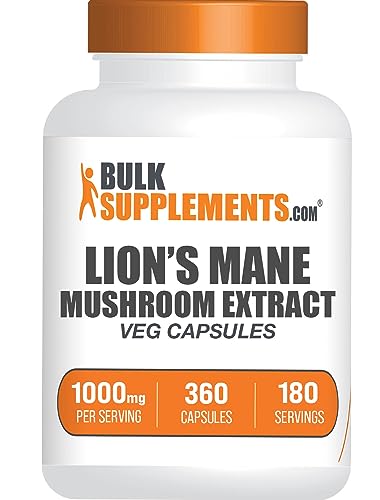
Look for fruiting-body extracts standardized for beta-glucan content, or dual-extract products that include both fruiting body and mycelium, from brands that publish third-party testing.
References
- Mori K, Obara Y, Hirota M, et al. Nerve growth factor-inducing activity of Hericium erinaceus in 1321N1 human astrocytoma cells. Biol Pharm Bull (2008). PMID 18758067
- Saitsu Y, Nishide A, Kikushima K, et al. Improvement of cognitive functions by oral intake of Hericium erinaceus. Biomed Res (2019). PMID 31413233
These statements have not been evaluated by the FDA. This product is not intended to diagnose, treat, cure, or prevent any disease. This article is for informational purposes only and is not a substitute for professional medical advice. As an Amazon Associate we earn from qualifying purchases.
These statements have not been evaluated by the Food and Drug Administration. This information is not intended to diagnose, treat, cure, or prevent any disease. Content is for informational purposes only and is not medical advice; consult a qualified healthcare provider before starting any supplement. As an Amazon Associate we earn from qualifying purchases.