Lion’s mane shows up in sports nutrition discussions on the strength of animal studies reporting increased muscle endurance and reduced fatigue markers. There is also a human trial, and it is the most important study in this article, because it tested lion’s mane in an exercise context and found nothing. This piece covers both sides honestly: what the animal data actually showed, what the human trial measured, and why the gap between them matters for anyone considering lion’s mane as a training supplement.
This site participates in the Amazon Associates program and may earn a commission on qualifying purchases. Nothing here has been evaluated by the FDA.
Key Takeaways
- A four-week human trial giving 10 g of lion’s mane per day found no significant effect on markers of metabolic flexibility or cognition in a college-age cohort.
- Mice fed a lion’s mane-supplemented diet for eight weeks showed a significant increase in muscle endurance, apparently via PPAR-delta activation.
- Lion’s mane polysaccharides reduced fatigue markers (blood lactic acid, serum urea nitrogen) and increased tissue glycogen in a 28-day mouse swimming study.
- The positive endurance and anti-fatigue findings are all in rodents; the one human exercise study was null.
- Lion’s mane is not currently a well-supported ergogenic aid, and framing it as one goes beyond what human data shows.
The Human Trial: A Null Result Worth Knowing About
A single-blind, placebo-controlled study published in 2022 set out to test whether lion’s mane affected metabolic flexibility (essentially, how efficiently the body switches between burning carbohydrate and fat) and cognition under exercise conditions. Twenty-four participants completed the protocol, receiving either 10 g of lion’s mane per day or placebo for four weeks, delivered in two muffins identical in taste and appearance. Participants performed a graded exercise test on a cycle ergometer to measure substrate oxidation rates and cardiorespiratory fitness, plus dual-task cognitive challenges before and after the exercise test to assess cognition in a fatigued state.[1]
The result: no significant interactions or main effects for any dependent variable, with all p-values above 0.05. The authors concluded that 10 g per day for four weeks had no impact on metabolic flexibility or cognition in a college-age cohort, and noted that further research is needed to establish an effective dose and duration before physiological changes could be expected in humans at all. Notably, 10 g per day is a substantial dose, well above what most commercial capsule products deliver.
The Animal Endurance Data
The rodent picture looks more encouraging, which is exactly why the contrast matters. A 2019 study found that hexane extracts of lion’s mane showed PPAR-delta agonist activity in laboratory testing. PPAR-delta is a nuclear receptor in skeletal muscle associated with endurance adaptations. Mice fed a diet supplemented with 5 percent freeze-dried lion’s mane showed upregulation of the PPAR-delta target genes Pdk4 and Ucp3, and after eight weeks on that diet showed a significant increase in muscle endurance.[2] Interestingly, the researchers found no significant change in muscle fiber type composition, which they described as unexpected given the mechanism they were investigating.
The Anti-Fatigue Polysaccharide Study
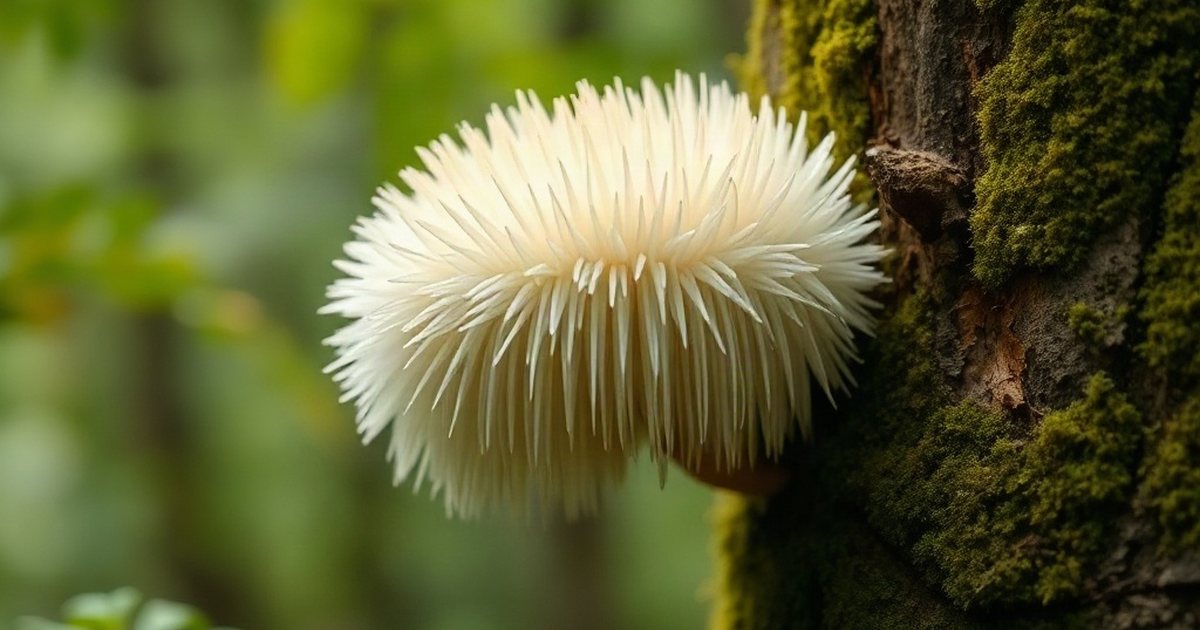
A separate 2015 study tested lion’s mane polysaccharides in mice across three dose levels (50, 100, and 200 mg/kg) over 28 days, followed by a forced swimming test to exhaustion. The treated groups showed decreased blood lactic acid, serum urea nitrogen, and malondialdehyde, alongside increased tissue glycogen content and antioxidant enzyme activity.[3] Those are the standard biochemical markers used to assess fatigue in rodent exercise models, and the direction of change was consistent across them. The authors framed the work as theoretical support for investigating lion’s mane in sports nutrition, which is a fair characterization of what a mouse swimming study can establish.
Why the Animal-to-Human Gap Matters Here
Rodent exercise models use doses, delivery methods, and controlled conditions that rarely translate directly. A 5 percent dietary inclusion in a mouse is not comparable to a capsule in a human. Forced swimming to exhaustion is not comparable to a training session. And critically, when researchers did test lion’s mane in humans doing actual exercise, at a generous 10 g daily dose, the effects did not appear. That is not proof lion’s mane can never help athletic performance, but it is the most directly relevant evidence available, and it was negative.
Practical Takeaway
If your interest in lion’s mane is cognitive, its human trial evidence in older adults with mild cognitive impairment is a more reasonable basis than anything in the exercise literature. If your interest is specifically athletic performance, endurance, or recovery, the honest position is that the supporting evidence is currently limited to rodents, and the one human study in an exercise context found no effect. Anyone selling lion’s mane as a performance supplement is working from the mouse data and skipping the human trial.
Frequently Asked Questions
Does lion’s mane improve athletic performance?
Human evidence does not currently support it. A four-week trial at 10 g per day found no effect on metabolic flexibility or cognition in an exercise context. The positive endurance findings come from mice, not people.

Why did the human study use muffins?
Delivering 10 g of mushroom powder daily in muffins identical in taste and appearance was how the researchers blinded participants to whether they were receiving lion’s mane or placebo, which would be difficult at that dose with capsules.
Could a higher dose or longer duration work?
The study authors raised exactly this point, noting that future research is needed to establish an effective dose and duration for physiological changes in humans. Ten grams per day for four weeks was not enough in that cohort, but no one has yet identified a dose or duration that is.
Does lion’s mane help with post-workout recovery?
No human study has tested this. The reduced fatigue markers reported in the rodent swimming study are suggestive of a mechanism worth investigating, not evidence of a recovery benefit in people.
References
- Grozier CD, Alves VA, Killen LG, Simpson JD, O’Neal EK, Waldman HS. Four Weeks of Hericium erinaceus Supplementation Does Not Impact Markers of Metabolic Flexibility or Cognition. Int J Exerc Sci (2022). PMID 36582308
- Komiya Y, Nakamura T, Ishii M, et al. Increase in muscle endurance in mice by dietary Yamabushitake mushroom (Hericium erinaceus) possibly via activation of PPAR-delta. Anim Sci J (2019). PMID 30938015
- Liu J, Du C, Wang Y, Yu Z. Anti-fatigue activities of polysaccharides extracted from Hericium erinaceus. Exp Ther Med (2015). PMID 25574220
These statements have not been evaluated by the FDA. This product is not intended to diagnose, treat, cure, or prevent any disease. This article is for informational purposes only and is not a substitute for professional medical advice. As an Amazon Associate we earn from qualifying purchases.
These statements have not been evaluated by the Food and Drug Administration. This information is not intended to diagnose, treat, cure, or prevent any disease. Content is for informational purposes only and is not medical advice; consult a qualified healthcare provider before starting any supplement. As an Amazon Associate we earn from qualifying purchases.