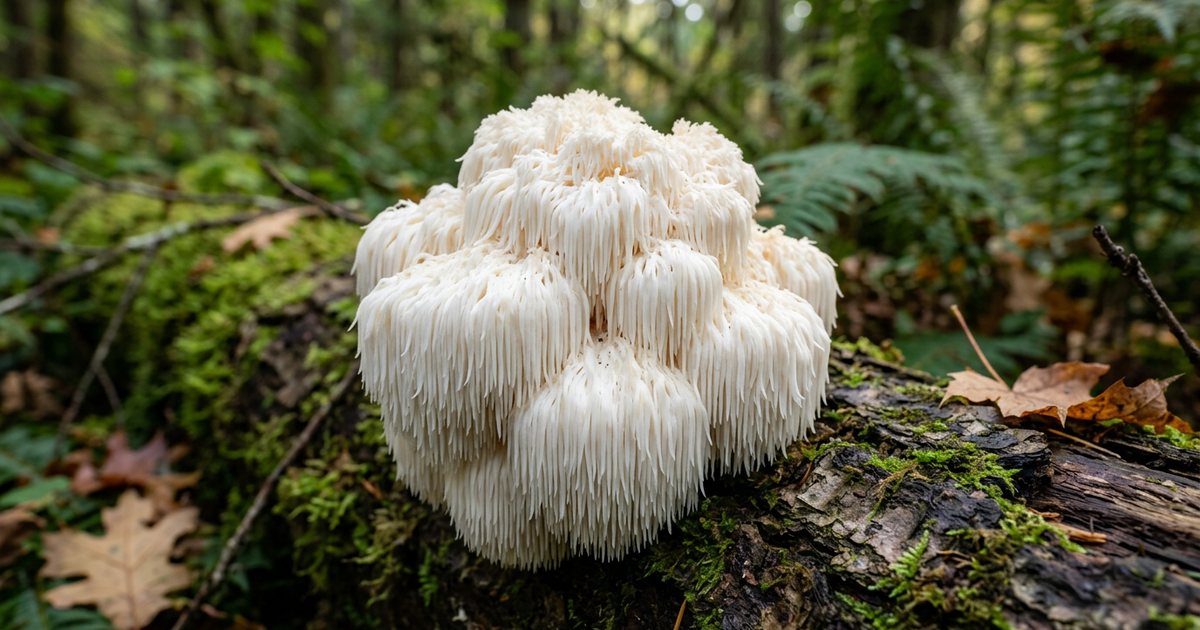
Multiple sclerosis communities have picked up on lion’s mane’s reputation as a “nerve-supporting” mushroom and connected it to myelin repair, the process damaged in MS. There is genuine preclinical research behind this connection, not just marketing, but it stops well short of a clinical trial in MS patients. This article lays out exactly what has and has not been studied.
This site participates in the Amazon Associates program and may earn a commission on qualifying purchases. Nothing here has been evaluated by the FDA, and MS is a serious autoimmune condition that should be managed under a neurologist’s care, not with supplements as a substitute for disease-modifying therapy.
Key Takeaways
- A 2021 lab study found that lion’s mane mycelium extract, and two of its isolated compounds, promoted oligodendrocyte precursor cells to mature into myelin-producing oligodendrocytes and increased myelin basic protein in cultured brain tissue [1].
- The same 2021 study found that orally dosing neonatal rat pups with the extract for 7 days increased myelin basic protein and oligodendrocyte counts in a brain region called the corpus callosum, a step beyond pure cell-culture data.
- An earlier, smaller in-vitro study found lion’s mane extract supported normal nerve and glial cell growth during the myelination process in cultured cerebellar tissue [2].
- No published research has tested lion’s mane in human MS patients, tracked MS relapse rates, disability scores, or MRI lesion activity on lion’s mane, or compared it to any MS disease-modifying therapy.
- MS involves the immune system attacking myelin; lion’s mane’s studied mechanism is supporting the cells that rebuild myelin afterward, a different and narrower question than whether it affects the underlying autoimmune process.
Why This Connection Gets Made
Multiple sclerosis is fundamentally a disease of demyelination, the immune system attacks and strips the protective myelin sheath from nerve fibers in the brain and spinal cord, disrupting signal transmission and causing the wide range of symptoms associated with MS. Remyelination, the body’s natural repair process, does happen to a degree but often incompletely, and boosting it is an active area of pharmaceutical and nutraceutical research. Lion’s mane’s documented effect on nerve growth factor and, more specifically, on oligodendrocyte biology, places it adjacent to this research question, which is why MS forums and wellness blogs have drawn a direct line between the two.
The Actual Oligodendrocyte Research
The most directly relevant study, published in Scientific Reports in 2021, is a laboratory investigation rather than a clinical trial. Researchers exposed oligodendrocyte precursor cells and cultured cerebellar tissue slices to lion’s mane mycelium extract and found it promoted the precursor cells’ maturation into full oligodendrocytes, the cells responsible for producing myelin, and increased myelin basic protein expression on nerve fibers. When researchers orally dosed the extract to neonatal rat pups for one week, they also found increased myelin basic protein and oligodendrocyte numbers in the corpus callosum, a major white matter structure. Two isolated compounds from the extract, erinacine A and a related sesterterpene, drove much of this effect [1]. An earlier and smaller study from 2003 similarly found lion’s mane extract supported normal nerve and glial cell development during cultured myelination, consistent with the more recent findings [2].
What This Research Does Not Show
Both studies above are preclinical, cell cultures, tissue slices, and healthy neonatal rodents, not a disease model of MS and not human patients. Demyelination in a lab dish or a healthy young rat brain is not the same biological situation as chronic, immune-driven demyelination in an adult MS patient, where ongoing inflammation and scar tissue (sclerosis) complicate any repair process. No study has tested whether lion’s mane affects MS relapse frequency, disability progression, MRI-visible lesion activity, or any other clinical MS outcome. The authors of the 2021 study themselves noted that further preclinical research specifically in demyelinating disease models is needed before drawing conclusions about conditions like MS.
The Autoimmune Piece This Research Does Not Address
MS is not simply a myelin-deficiency problem, it is an autoimmune condition where the immune system actively attacks myelin, meaning ongoing damage can outpace any repair-supporting mechanism. The oligodendrocyte research above addresses the repair side of that equation, not the autoimmune attack itself. This is a meaningful gap: a supplement that plausibly supports remyelination in a lab setting says nothing about whether it affects the underlying immune dysfunction driving the disease.
Practical Takeaway
Lion’s mane has real, published preclinical evidence for promoting oligodendrocyte maturation and myelin basic protein expression, a legitimate and specific mechanism relevant to remyelination research. It has zero clinical evidence in MS patients and should never be used as a substitute for prescribed disease-modifying therapy. Anyone with MS considering it should discuss it with their neurologist first, both for interaction considerations and because delaying or replacing proven treatment carries real risk.
Frequently Asked Questions
Has lion’s mane been tested in MS patients?
No. All existing research is preclinical, cell cultures and animal studies, not human MS patients or clinical trials.
Does lion’s mane help rebuild myelin?
Lab research shows it promotes the maturation of myelin-producing cells and increases myelin protein expression in cell cultures and young rodents. Whether this translates to meaningful remyelination in the context of chronic human MS has not been tested.
Can lion’s mane replace my MS medication?
No. There is no clinical evidence lion’s mane affects MS relapse rates or disease progression, and it should never replace a prescribed disease-modifying therapy.
Is it safe to take lion’s mane alongside MS medications?
There is no published research on interactions between lion’s mane and specific MS disease-modifying therapies. Anyone on MS medication should discuss any new supplement with their neurologist first.
Does lion’s mane affect the autoimmune process in MS?
The existing research addresses myelin repair biology, not the immune system’s attack on myelin, which is a separate and unaddressed question in the current literature.

References
- Huang HT, Ho CH, Sung HY, et al. Hericium erinaceus mycelium and its small bioactive compounds promote oligodendrocyte maturation with an increase in myelin basic protein. Sci Rep (2021). PMID 33753806
- Kolotushkina EV, Moldavan MG, Voronin KY, Skibo GG. The influence of Hericium erinaceus extract on myelination process in vitro. Fiziol Zh (2003). PMID 12675022
These statements have not been evaluated by the FDA. This product is not intended to diagnose, treat, cure, or prevent any disease. This article is for informational purposes only and is not a substitute for professional medical advice. As an Amazon Associate we earn from qualifying purchases.
These statements have not been evaluated by the Food and Drug Administration. This information is not intended to diagnose, treat, cure, or prevent any disease. Content is for informational purposes only and is not medical advice; consult a qualified healthcare provider before starting any supplement. As an Amazon Associate we earn from qualifying purchases.