Tinnitus communities online have picked up on lion’s mane’s nerve-regeneration research and connected it to ear ringing, reasoning that if the mushroom supports nerve repair, it might help the auditory nerve too. No clinical trial has directly tested lion’s mane for tinnitus. This article separates the real adjacent research from the speculation.
This site participates in the Amazon Associates program and may earn a commission on qualifying purchases. Nothing here has been evaluated by the FDA, and tinnitus should always be evaluated by an audiologist or ENT to rule out treatable underlying causes.
Key Takeaways
- No published clinical trial has tested lion’s mane specifically for tinnitus; the connection is inferred from separate hearing and nerve-regeneration research.
- The most relevant human evidence is a 2022 trial in older adults that found lion’s mane supplementation improved hearing test scores, particularly at high frequencies, in participants aged 65 and older over 8 months.
- Animal research has shown Hericium erinaceus extract speeds functional nerve recovery after a peripheral nerve crush injury, supporting the general nerve-regeneration mechanism, though this was not auditory-nerve tissue [1].
- Tinnitus has many distinct underlying causes, noise-induced hearing loss, earwax blockage, TMJ dysfunction, medication side effects, and identifying the cause matters more than any single supplement.
- Lion’s mane is reasonable to consider as a general nerve-supportive addition for tinnitus linked to auditory nerve damage specifically, but it should not delay a proper audiological evaluation.
Why the Tinnitus Connection Gets Made
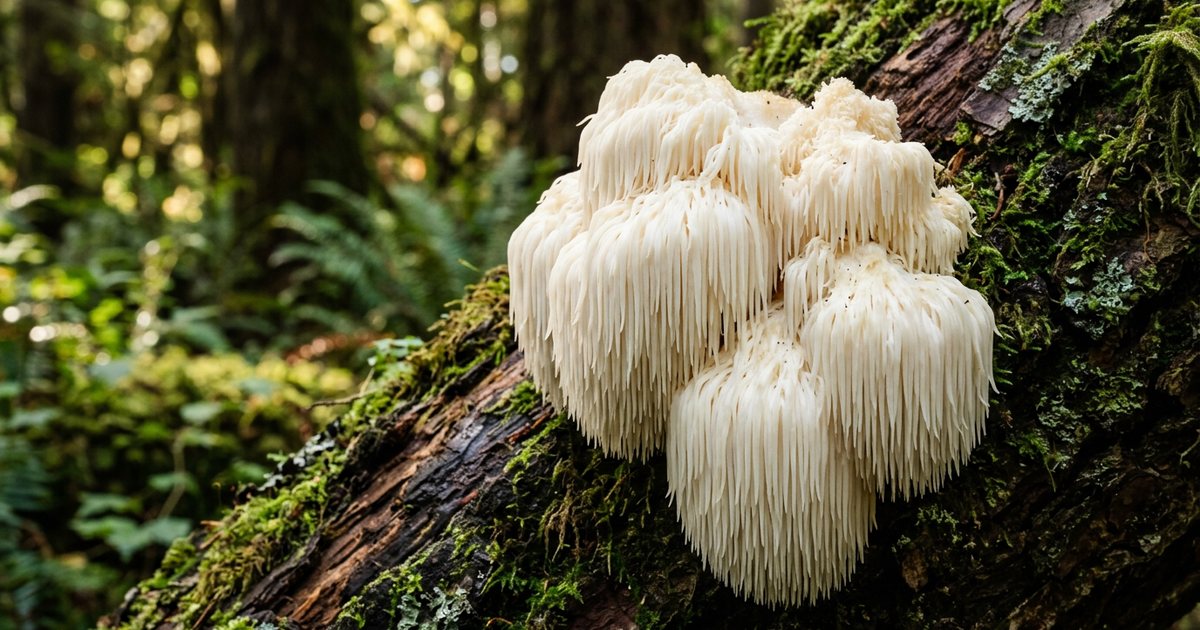
Tinnitus, persistent ringing, buzzing, or hissing with no external sound source, is frequently linked to damage or dysfunction somewhere along the auditory nerve pathway, particularly after noise exposure or age-related hearing decline. Lion’s mane’s best-known mechanism is stimulating nerve growth factor, which supports the repair and maintenance of neurons generally. The logical leap from “supports nerve repair” to “might help tinnitus” is understandable, but it has not been tested directly.
The Most Relevant Human Study: Hearing, Not Tinnitus
The closest human evidence comes from a 2022 double-blind randomized trial involving 80 adults aged 50 to 79, who took 2,000 mg of lion’s mane daily or placebo for 8 months. The trial measured hearing thresholds, not tinnitus directly, and found that participants aged 65 and older in the lion’s mane group showed significant improvement in hearing test scores compared to placebo, particularly for high-frequency sounds and speech recognition, alongside an increase in measured nerve growth factor levels. This is meaningful because age-related hearing loss and tinnitus frequently co-occur and share underlying auditory nerve mechanisms, but the trial did not report on tinnitus symptoms specifically, so it cannot be read as direct tinnitus evidence.
What the Nerve Regeneration Research Shows
Separately, animal research has demonstrated lion’s mane’s nerve-regeneration effect in a more direct physical sense. A study using an aqueous extract of fresh lion’s mane fruiting bodies, given orally to rats with a crush injury to the peroneal nerve, found the treated animals recovered hind limb function faster than untreated controls, with the researchers attributing this to erinacine and hericenone-driven stimulation of nerve growth factor synthesis [1]. This confirms the mushroom can measurably accelerate peripheral nerve repair in an animal model, but the auditory nerve was not the tissue studied, so this is supportive of plausibility rather than direct proof for tinnitus.
What Actually Causes Tinnitus, and Why That Matters
Tinnitus is a symptom with many distinct causes: noise-induced hearing damage, age-related hearing loss, earwax impaction, certain medications (including some antibiotics, high-dose aspirin, and certain chemotherapy drugs), TMJ or jaw joint dysfunction, and less commonly, vascular or neurological conditions. A supplement aimed at nerve regeneration is only plausibly relevant to the subset of cases tied to auditory nerve damage, not to earwax blockage or TMJ-related tinnitus, which is why a proper diagnosis matters before assuming any single intervention, supplement or otherwise, is the right approach.
Practical Takeaway
Lion’s mane has real, if indirect, research supporting a plausible mechanism for auditory nerve-related tinnitus, hearing-improvement data in older adults plus general peripheral nerve regeneration in animal models, but no trial has tested it against tinnitus directly. It is reasonable to try alongside, not instead of, a proper audiological workup, particularly for tinnitus that developed alongside age-related hearing change.
Frequently Asked Questions
Is lion’s mane proven to reduce tinnitus?
No. No clinical trial has tested lion’s mane against tinnitus specifically. The supporting evidence is indirect, from hearing-improvement and general nerve-regeneration research.
How long would it take to notice an effect on tinnitus, if any?
The most relevant hearing trial used continuous daily dosing for 8 months before measuring results, so any realistic timeline would likely be measured in months, not days or weeks.
Should I see a doctor before trying lion’s mane for tinnitus?
Yes. Tinnitus has many distinct causes, some of which are treatable directly, such as earwax blockage or a medication side effect, and an audiologist or ENT visit should come first.
Does lion’s mane help all types of tinnitus?
There is no research on this at all, but by mechanism it would only plausibly be relevant to tinnitus linked to auditory nerve damage, not causes like earwax blockage or TMJ dysfunction.
What dose was used in the hearing-related trial?
The 2022 hearing trial used 2,000 mg of lion’s mane daily for 8 months; this has not been specifically validated for tinnitus.

References
- Wong KH, Naidu M, David RP, et al. Peripheral nerve regeneration following crush injury to rat peroneal nerve by aqueous extract of medicinal mushroom Hericium erinaceus. Evid Based Complement Alternat Med (2011). PMID 21941586
These statements have not been evaluated by the FDA. This product is not intended to diagnose, treat, cure, or prevent any disease. This article is for informational purposes only and is not a substitute for professional medical advice. As an Amazon Associate we earn from qualifying purchases.
These statements have not been evaluated by the Food and Drug Administration. This information is not intended to diagnose, treat, cure, or prevent any disease. Content is for informational purposes only and is not medical advice; consult a qualified healthcare provider before starting any supplement. As an Amazon Associate we earn from qualifying purchases.