Sticker price on a lion’s mane bottle can be misleading. A cheap bottle with 60 capsules at a low per-serving dose can end up costing more per effective dose than a pricier bottle with a concentrated extract and 300 servings. This guide breaks down how to actually calculate cost per serving, what the real market range looks like across budget, mid-range, and premium brands, and where extra spend tends to buy something meaningful versus just marketing.
This site participates in the Amazon Associates program and may earn a commission on qualifying purchases. Nothing here has been evaluated by the FDA.
Key Takeaways
- Cost per serving is calculated by dividing total bottle price by the number of servings on the label, not by the sticker price alone.
- Budget capsule options cost the least per serving; mid-range extract-focused brands cost noticeably more.
- Premium dual-extract or high-potency-equivalent products cost the most per serving.
- A lower price per serving is not automatically better value if the product uses a low-potency form or doesn’t disclose its beta-glucan content.
- Servings-per-container and dose-per-serving vary widely across brands, so always check both numbers rather than comparing bottle prices directly.
How to Actually Calculate Cost Per Serving
Divide the total price you pay at checkout by the number of servings listed on the supplement facts panel, not the number of capsules, since some products call for two or three capsules per serving. A bottle that looks cheaper on the shelf can quietly cost more per serving than a competitor if it has a shorter count or a multi-capsule serving size. This single calculation is the most reliable way to compare across brands with different bottle sizes, capsule counts, and dosing.
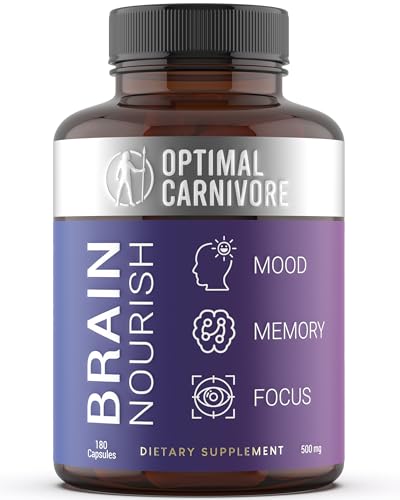
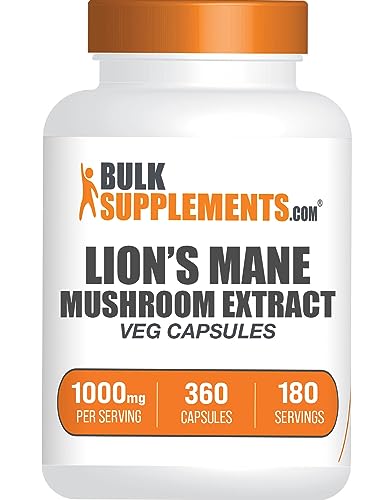
Budget Tier: The Lowest Cost Per Serving
Standard 500mg-1000mg capsule products from mainstream supplement brands typically fall in this range, often 60-90 capsules per bottle at a low sticker price. These products are usually straightforward mycelium or fruiting-body powder without dual-extraction processing, and don’t always disclose a specific beta-glucan percentage. They’re a reasonable entry point for someone who wants to try lion’s mane without much financial commitment, but the lack of standardization data makes it harder to know exactly what’s in each capsule beyond the raw mushroom material weight.
Mid-Range Tier: A Step Up in Cost Per Serving
This tier is where hot-water extraction and disclosed beta-glucan percentages (commonly 25-30%+) start to appear, along with combination products that pair lion’s mane with adaptogens like ashwagandha or rhodiola. Brands in this range are more likely to publish third-party testing results and specify fruiting-body versus mycelium sourcing explicitly, which matters because fruiting-body extracts are generally considered to carry a more favorable active-compound profile than mycelium-only products.
Premium Tier: The Highest Cost Per Serving
Premium pricing usually reflects one of two things: a genuinely higher-concentration dual extract (both water and alcohol extraction, capturing both hericenones and erinacines)[1] or a well-known brand name with heavier marketing spend. Dual-extraction is a legitimate reason for a price premium, since a single extraction method typically only pulls one class of the mushroom’s active compounds.[2] A brand name alone, without disclosed extraction method or beta-glucan content, is a weaker justification for the higher price.

What Actually Justifies Paying More
Three things are worth paying a premium for: disclosed beta-glucan percentage (a concrete, comparable number, not all brands report this), fruiting-body sourcing or a clearly labeled dual extract, and independent third-party lab testing for potency and contaminants. A high price alone, without any of these three disclosures, is not a reliable signal of quality. Conversely, a low-priced product that does disclose all three is not automatically inferior just because it’s cheaper.
Practical Takeaway
Do the actual math (price divided by number of servings, not capsules) before comparing products, and weigh that number against what the label discloses about extraction method and beta-glucan content rather than price or brand recognition alone. A budget product with no potency disclosure is not automatically a better deal than a mid-range product that specifies 30% beta-glucans from fruiting-body extract, and vice versa.
Frequently Asked Questions
What’s a reasonable price per serving to expect?
Cost per serving runs from lowest for basic capsule products to highest for concentrated dual extracts, with well-reviewed mid-range products that disclose potency in between. Prices change, so do the math on the current listing.
Is a higher price always better?
No. Price alone doesn’t guarantee higher quality. Look for disclosed beta-glucan percentage, extraction method, and third-party testing rather than relying on price as a quality signal.
Why do serving sizes vary so much between brands?
Some brands define a serving as one capsule, others as two or three, and dose-per-capsule also varies widely (300mg to 1000mg+). This is exactly why comparing sticker price without checking servings-per-container can be misleading.
Does powder cost less than capsules per serving?
Not necessarily, though bulk powder can sometimes offer a lower per-serving cost since you avoid encapsulation costs. The tradeoff is less precise dosing and no capsule convenience, so the better format depends on personal preference as much as price.
References
- Wang J, et al. Uncovering Hericenones from the Fruiting Bodies of Hericium erinaceus through Interdisciplinary Collaboration. J Nat Prod (2025). PMID 39723452
- Yan JK, et al. Comparative study of physicochemical properties and bioactivity of Hericium erinaceus polysaccharides at different solvent extractions. Carbohydr Polym (2018). PMID 29773393
Note on pricing data: Pricing and product data compiled from published 2026 lion’s mane supplement buying-guide comparisons across multiple independent reviewers, cross-checked against current retailer listings at the time of writing.
These statements have not been evaluated by the FDA. This product is not intended to diagnose, treat, cure, or prevent any disease. This article is for informational purposes only and is not a substitute for professional medical advice. As an Amazon Associate we earn from qualifying purchases.
These statements have not been evaluated by the Food and Drug Administration. This information is not intended to diagnose, treat, cure, or prevent any disease. Content is for informational purposes only and is not medical advice; consult a qualified healthcare provider before starting any supplement. As an Amazon Associate we earn from qualifying purchases.