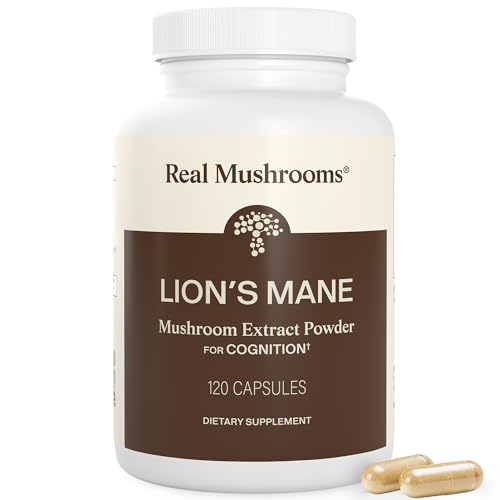
As women enter midlife and navigate the changes of perimenopause and menopause, concerns about cognitive health often become more prominent. Many seek natural ways to support their brain function and maintain sharpness. Lion’s mane mushroom (Hericium erinaceus) has garnered attention for its potential neurological benefits.
This article explores the current research surrounding lion’s mane mushroom and its potential role in supporting cognitive health, specifically in the context of dementia considerations for women in midlife. We’ll examine what the science suggests, keeping in mind that most studies are preliminary or conducted in specific populations.
Understanding Cognitive Changes in Midlife and Perimenopause
Midlife and perimenopause can bring about a range of physiological changes, including fluctuations in hormone levels that may influence cognitive function. Some women report experiencing ‘brain fog,’ memory lapses, or difficulty concentrating during this time. While these changes are often temporary and part of the natural aging process, they can understandably raise questions about long-term brain health and the potential for cognitive decline.
Lion’s Mane Mushroom: An Overview of Brain-Supporting Compounds
Lion’s mane mushroom is known for containing bioactive compounds such as hericenones and erinacines. These compounds are of interest due to their potential neuroprotective properties. Research indicates that lion’s mane may possess antioxidant, anti-inflammatory, and antimicrobial potential, which are all factors that can influence overall brain health [1].
Specifically, erinacines, found primarily in the mycelia of the mushroom, have been investigated for their potential to support nerve growth factor (NGF) synthesis, which is important for the maintenance and survival of neurons. Hericenones, found in the fruiting body, are also being studied for their potential neurological effects.
Lion’s Mane and Cognitive Function: What the Research Suggests
While direct research on lion’s mane for dementia prevention specifically in perimenopausal women is limited, some studies offer insights into its broader cognitive potential. A narrative review from 2025 suggests that Hericium erinaceus could be a possible future therapeutic treatment for the delayed progression of Alzheimer’s disease [2]. Another review highlights its neuroprotective properties, including antioxidant and anti-inflammatory effects [1].
A pilot double-blind placebo-controlled study in 2020 explored the prevention of early Alzheimer’s disease using erinacine A-enriched Hericium erinaceus mycelia [3]. This study provides some early indications of potential benefits, though more extensive research is needed to confirm these findings. Animal studies have also shown neuroprotective effects of Hericium erinaceus in models of Alzheimer’s disease-like symptoms [4].
Beyond cognitive decline, lion’s mane has also been investigated for other neurological aspects. For instance, it has shown anxiolytic effects in a mouse model [5] and has been explored for its therapeutic potential in depressive disorder [6]. These related areas of research contribute to the broader understanding of lion’s mane’s impact on brain health.
Applying Research to Perimenopausal Women: Considerations
It’s important to note that much of the existing research on lion’s mane and cognitive health, including studies related to conditions like Alzheimer’s disease, has not specifically focused on perimenopausal women. The physiological changes unique to this life stage, particularly hormonal fluctuations, could influence how the mushroom interacts with the body and brain.
Therefore, while the general findings on neuroprotection and cognitive support are promising, direct conclusions about ‘dementia prevention’ in perimenopausal women specifically cannot be definitively drawn from the current evidence. The moderate strength of evidence suggests potential, but more targeted and robust human clinical trials in this specific population are necessary to provide clearer guidance.
References
- Lion’s Mane Mushroom (Hericium erinaceus): A Neuroprotective Fungus with Antioxidant, Anti-Inflammatory, and Antimicrobial Potential-A Narrative Review. Nutrients, 2025
- Hericium erinaceus: A possible future therapeutic treatment for the prevention and delayed progression of Alzheimer’s disease? – A narrative review. Nutrition research reviews, 2025
- Prevention of Early Alzheimer’s Disease by Erinacine A-Enriched Hericium erinaceus Mycelia Pilot Double-Blind Placebo-Controlled Study. Frontiers in aging neuroscience, 2020
- Neuroprotective Effects of Dehydroepiandrosterone and Hericium erinaceus in Scopolamine-induced Alzheimer’s Diseases-like Symptoms in Male Rats. Cell biochemistry and biophysics, 2024
- Lion’s Mane (Hericium erinaceus) Exerts Anxiolytic Effects in the rTg4510 Tau Mouse Model. Behavioral sciences (Basel, Switzerland), 2022
- Therapeutic Potential of Hericium erinaceus for Depressive Disorder. International journal of molecular sciences, 2019
These statements have not been evaluated by the Food and Drug Administration. This information is not intended to diagnose, treat, cure, or prevent any disease. Content is for informational purposes only and is not medical advice; consult a qualified healthcare provider before starting any supplement. As an Amazon Associate we earn from qualifying purchases.