Postoperative cognitive dysfunction, sometimes shortened to POCD, describes the fogginess, memory lapses, and slowed thinking some people experience for weeks or months after major surgery, particularly older adults after procedures requiring general anesthesia. It is a real and researched phenomenon in anesthesiology, distinct from ordinary post-surgery grogginess. This article looks honestly at whether lion’s mane’s neuroprotective research has anything specific to say about it, because the direct answer is more limited than the framing of most content on this topic suggests.
This site participates in the Amazon Associates program and may earn a commission on qualifying purchases. Nothing here has been evaluated by the FDA, and nothing here is a substitute for a surgeon or anesthesiologist’s guidance around a specific procedure.
Key Takeaways
- No published clinical trial has tested lion’s mane specifically for postoperative cognitive dysfunction; this is an area with no direct human evidence.
- The interest comes from lion’s mane’s well-documented ability to stimulate nerve growth factor (NGF), which supports neuron repair and maintenance [1], a mechanism relevant to any brain-recovery context in theory.
- A separate erinacine A-enriched extract trial in early Alzheimer’s patients found measurable neuroprotective and cognitive effects over 12 months, showing the mechanism can translate to slower human cognitive decline in at least one context [2].
- Anesthesia type, surgery duration, age, and pre-existing cognitive status are the actual established risk factors for POCD, none of which a supplement addresses.
- Anyone considering any supplement, including lion’s mane, around a surgery date should clear it with the surgical team first, since some supplements affect bleeding risk or interact with anesthesia.
What POCD Actually Is
Postoperative cognitive dysfunction is a documented, studied condition in anesthesiology and geriatric medicine, most common after cardiac surgery and major procedures in adults over 60, involving measurable declines in memory, attention, and processing speed that can persist for weeks, and in a smaller subset of cases longer. It is thought to involve a combination of surgical inflammatory response, anesthesia effects on the brain, and disrupted sleep and metabolic state during recovery. It is a legitimate clinical concern, which is exactly why the idea of a neuroprotective mushroom being relevant to it is not unreasonable on its face.
Why There Is No Direct Research Yet
A direct search of the available literature turns up no published trial testing lion’s mane in surgical patients for POCD prevention or recovery. This is very likely a case of an under-researched intersection rather than a tested-and-failed one, POCD research and lion’s mane research have simply not crossed paths in a published trial yet. That distinction matters: absence of evidence is not evidence that it does not work, but it also means nobody should describe lion’s mane as a validated POCD intervention.
What the Adjacent Research Does Show
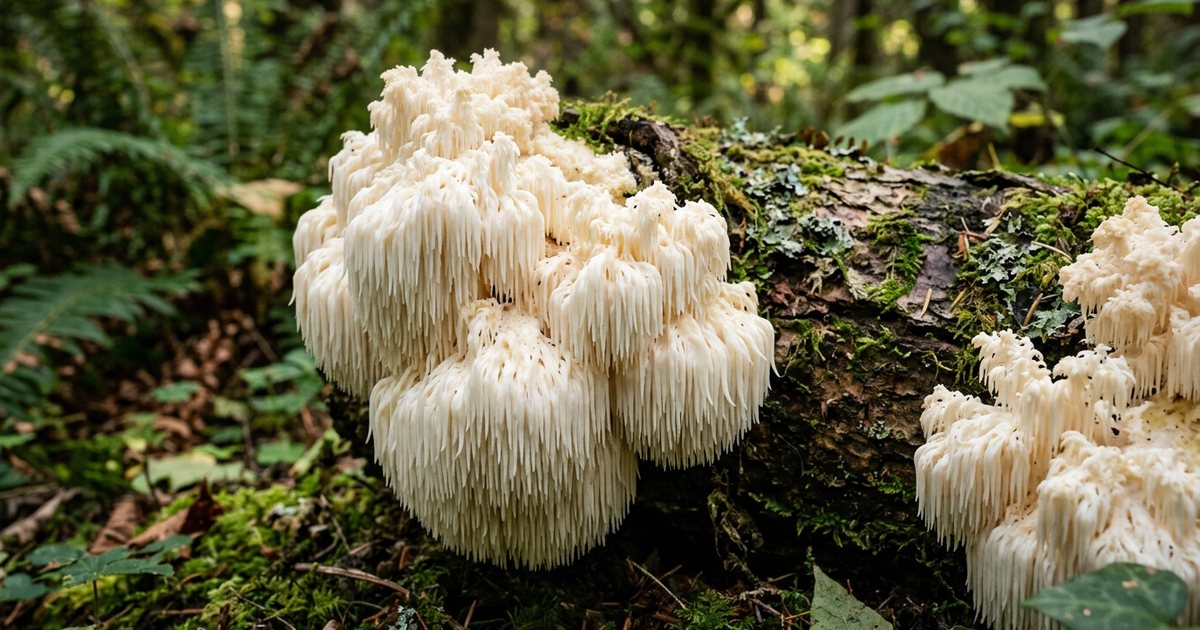
The mechanistic case rests on the same NGF pathway relevant to most lion’s mane cognitive claims. Laboratory research found lion’s mane extract uniquely able, among mushrooms tested, to promote NGF gene expression in human astrocytoma cells, with corresponding increases in hippocampal NGF in an animal model [1]. Separately, in one of the more rigorous human trials involving lion’s mane and brain health, a 12-month randomized placebo-controlled trial of erinacine A-enriched mycelia in patients with mild, early-stage Alzheimer’s found improvements on cognitive test scores alongside changes in blood biomarkers associated with amyloid and inflammation, compared to placebo [2]. That trial demonstrates the NGF mechanism can produce a measurable cognitive effect over time in a real disease-recovery context, which is the closest existing analog to a POCD-recovery scenario, though early Alzheimer’s and post-surgical cognitive decline are different conditions with different underlying biology.
What Actually Reduces POCD Risk, According to Anesthesiology Research
The factors with real evidence behind them are procedural, not supplemental: minimizing anesthesia depth and duration where clinically appropriate, using regional rather than general anesthesia when the surgery allows it, prioritizing sleep and early mobilization during recovery, and managing post-surgical pain without excessive sedating medication. These are conversations to have with the surgical and anesthesia team well before the procedure, and they matter more than any supplement choice.
Where Lion’s Mane Might Reasonably Fit
Given the plausible mechanism and the good general safety profile of lion’s mane in healthy adults, some people reasonably choose to start it during recovery as a general brain-supportive habit, alongside, not instead of, the evidence-based recovery steps above. It should be raised with the surgical team beforehand, not started independently in the days immediately around surgery, because supplement timing around anesthesia and bleeding risk is a real clinical consideration regardless of the specific supplement.
Frequently Asked Questions
Is lion’s mane proven to prevent or treat postoperative cognitive dysfunction?
No. There is no published clinical trial testing this specific use. The interest is based on a plausible but untested mechanism.
Is it safe to take lion’s mane before surgery?
Any supplement should be disclosed to the surgical and anesthesia team ahead of time. Some sources recommend stopping non-essential supplements 1 to 2 weeks before major surgery as a general precaution; follow the specific guidance given by the surgical team.
Who is most at risk for postoperative cognitive dysfunction?
Older adults, particularly those over 60, undergoing longer or more invasive procedures such as cardiac surgery, with pre-existing mild cognitive impairment being an additional risk factor.
How long does postoperative cognitive dysfunction typically last?
It varies considerably; many cases resolve within weeks to a few months, though a smaller subset of patients, especially older adults after major surgery, experience longer-lasting changes.
What should I actually do to protect my cognition around surgery?
Discuss anesthesia approach with your surgical team, prioritize sleep and early movement during recovery, and manage pain without over-relying on heavily sedating medication, these have the strongest evidence behind them.
References
- Mori K, Obara Y, Hirota M, et al. Nerve growth factor-inducing activity of Hericium erinaceus in 1321N1 human astrocytoma cells. Biol Pharm Bull (2008). PMID 18758067
- Li IC, Chang HH, Lin CH, et al. Prevention of Early Alzheimer’s Disease by Erinacine A-Enriched Hericium erinaceus Mycelia. Front Aging Neurosci (2020). PMID 32581767
These statements have not been evaluated by the FDA. This product is not intended to diagnose, treat, cure, or prevent any disease. This article is for informational purposes only and is not a substitute for professional medical advice. As an Amazon Associate we earn from qualifying purchases.
These statements have not been evaluated by the Food and Drug Administration. This information is not intended to diagnose, treat, cure, or prevent any disease. Content is for informational purposes only and is not medical advice; consult a qualified healthcare provider before starting any supplement. As an Amazon Associate we earn from qualifying purchases.