Ready to buy? Check current prices on Amazon and compare deals before you decide.
Perimenopause, the transitional phase leading up to menopause, often brings a range of changes, including shifts in cognitive function. Many women report experiencing ‘brain fog,’ characterized by difficulties with concentration, memory, and mental clarity. This can be a significant concern, impacting daily life and productivity.
As interest in natural approaches to wellness grows, some women are exploring botanical options like lion’s mane mushroom (Hericium erinaceus) for cognitive support. This article will delve into the current understanding of lion’s mane and its potential role in supporting focus and concentration during perimenopause, based on available evidence.
Understanding Perimenopausal ‘Brain Fog’
Before discussing potential interventions, it’s helpful to understand the nature of perimenopausal cognitive changes. Hormonal fluctuations, particularly in estrogen, are thought to play a significant role in these experiences. Estrogen receptors are present in various brain regions involved in memory and executive function.
Beyond hormones, other factors like sleep disturbances, increased stress, and mood changes, which are common during perimenopause, can also contribute to feelings of reduced focus and concentration. It’s a complex interplay of physiological and lifestyle factors that can make everyday tasks requiring sustained attention feel more challenging.

What is Lion’s Mane Mushroom?
Lion’s mane is an edible medicinal mushroom recognized for its unique appearance, resembling a white, shaggy waterfall of icicles. It has a long history of use in traditional East Asian medicine, where it has been valued for its purported health benefits, including those related to cognitive function.
The mushroom contains bioactive compounds, including hericenones and erinacines, which are of particular interest to researchers studying its effects on the brain. These compounds are believed to interact with nerve growth factor (NGF), a protein crucial for the growth, maintenance, and survival of nerve cells in the brain. However, much of the research in this area is still emerging.
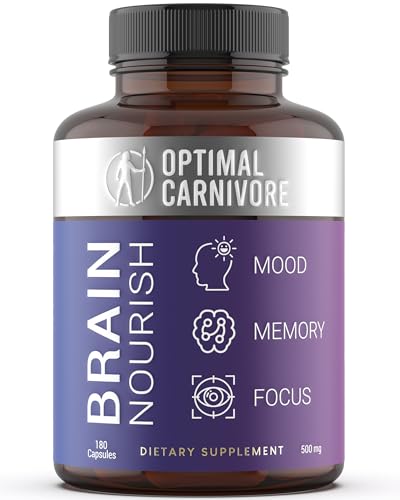
Lion’s Mane and Cognitive Function: What the Evidence Suggests
When considering lion’s mane for focus and concentration, the honest place to start is the one trial that speaks to it directly. A randomized, placebo-controlled study gave thirty menopausal women lion’s mane or placebo cookies daily for four weeks and tracked a list of complaints that included concentration. Two items improved significantly against placebo. Concentration was not one of them: it trended toward improvement without reaching statistical significance, alongside irritability and anxiety[1].
That result belongs at the top of this page rather than in a footnote. The single human trial ever run in this population measured the exact outcome this article is about, and it came back null. With thirty participants over four weeks it is a weak null, not a refutation, and a longer or larger trial could find something. But no such trial has been run, and until one is, “lion’s mane for perimenopausal focus” is a hypothesis rather than a finding.
However, some studies have explored the effects of lion’s mane on general cognitive function. It’s important to note that these studies often involve specific populations or conditions and may not directly translate to the unique experiences of women in perimenopause. The evidence base is still developing, and more robust research, particularly in human populations and specific to perimenopause, is needed to draw definitive conclusions.
It is also important to consider that much of the existing research on lion’s mane and cognition has been conducted in animal models or in specific clinical populations, such as older adults with mild cognitive impairment. While these studies can provide insights, their findings may not be directly applicable to healthy women experiencing perimenopausal cognitive changes. Two recent placebo-controlled trials in healthy adults are worth weighing as well. An acute study of a 10:1 fruiting-body extract found no significant effect on composite measures of global cognitive function or mood, with a single pegboard measure moving[2]. A 28-day pilot in 41 young adults reported faster Stroop performance after a single dose, but its authors record that “null and limited negative findings were also observed”, and the reduction in subjective stress did not clear significance[3]. A systematic review of the human intervention literature describes the results across ten such studies as mixed[4].
An earlier version of this page described that evidence as “moderate”. No grading body has issued that assessment, and it sat awkwardly beside this page’s own statement that no direct research existed. For focus and concentration specifically in perimenopause, the accurate description is one small null result and no confirmatory work.
Potential Mechanisms: How Lion’s Mane Might Work
The proposed mechanisms behind lion’s mane’s potential cognitive benefits revolve around its unique compounds. Hericenones and erinacines are thought to stimulate the production of nerve growth factor (NGF). NGF is vital for brain health, supporting the growth and repair of neurons, which are the fundamental building blocks of the brain responsible for transmitting information.
By potentially supporting NGF, lion’s mane might contribute to neuronal health and plasticity, which could, in theory, support cognitive functions like focus and concentration. However, demonstrating a direct link between NGF stimulation by lion’s mane and improved cognitive outcomes in humans, especially in perimenopause, requires more extensive research. The complexity of brain function means that multiple pathways are involved, and a single mechanism may not fully explain any observed effects.
Integrating Lion’s Mane: Considerations for Women in Midlife
For women navigating perimenopause and seeking ways to support their focus and concentration, lion’s mane could be considered as part of a broader wellness strategy. However, it’s crucial to manage expectations, as the scientific evidence specifically for perimenopausal cognitive support is still emerging and moderate.
Lifestyle factors remain foundational for cognitive health. Prioritizing adequate sleep, engaging in regular physical activity, managing stress through techniques like mindfulness or meditation, and maintaining a balanced diet rich in whole foods are all critical. These habits provide a strong base for brain health that supplements may complement but not replace. When considering lion’s mane, it should be viewed as a potential supportive element rather than a standalone solution.
References
- Nagano M, Shimizu K, Kondo R, Hayashi C, Sato D, Kitagawa K, Ohnuki K. Reduction of depression and anxiety by 4 weeks Hericium erinaceus intake. Biomedical Research (2010). PMID 20834180
- Surendran G, Saye J, Binti Mohd Jalil S, et al. Acute effects of a standardised extract of Hericium erinaceus (Lion’s Mane mushroom) on cognition and mood in healthy younger adults: a double-blind randomised placebo-controlled study. Frontiers in Nutrition (2025). PMID 40276537
- Docherty S, Doughty FL, Smith EF. The acute and chronic effects of Lion’s Mane mushroom supplementation on cognitive function, stress and mood in young adults: a double-blind, parallel groups, pilot study. Nutrients (2023). PMID 38004235
- Cha S, Bell L, Shukitt-Hale B, Williams CM. A review of the effects of mushrooms on mood and neurocognitive health across the lifespan. Neuroscience & Biobehavioral Reviews (2024). PMID 38246232
These statements have not been evaluated by the Food and Drug Administration. This information is not intended to diagnose, treat, cure, or prevent any disease. Content is for informational purposes only and is not medical advice; consult a qualified healthcare provider before starting any supplement. As an Amazon Associate we earn from qualifying purchases.