Supplement labels throw around terms like “dual extract,” “fruiting body only,” and “10:1 extract ratio” without much explanation. Understanding how lion’s mane actually goes from mushroom to capsule makes those label claims easier to evaluate, and easier to tell apart from marketing language.
This site participates in the Amazon Associates program and may earn a commission on qualifying purchases. Nothing here has been evaluated by the FDA.
Key Takeaways
- Lion’s mane’s two main compound families require different extraction methods: hot water extraction pulls out beta-glucan polysaccharides, while alcohol extraction pulls out hericenones and erinacines.
- A “dual extract” combines both a water extraction and an alcohol extraction step to capture both compound families in one product, rather than using just one method.
- Fruiting body (the mushroom itself) and mycelium (the root-like growing network) have measurably different compound profiles: hericenones concentrate in the fruiting body and erinacines in the mycelium. That is a difference in which compound family dominates, not a ranking, and no published study has compared total polysaccharide content between the two directly.
- Cultivation happens either on natural hardwood logs, which is slower and closer to wild growing conditions, or on grain or sawdust substrate, which is faster and more common commercially.
- Extract ratios like “8:1” indicate how much raw material went into producing a given amount of finished extract, a rough proxy for concentration, but they are not independently standardized across brands.
Growing the Mushroom: Logs vs. Substrate
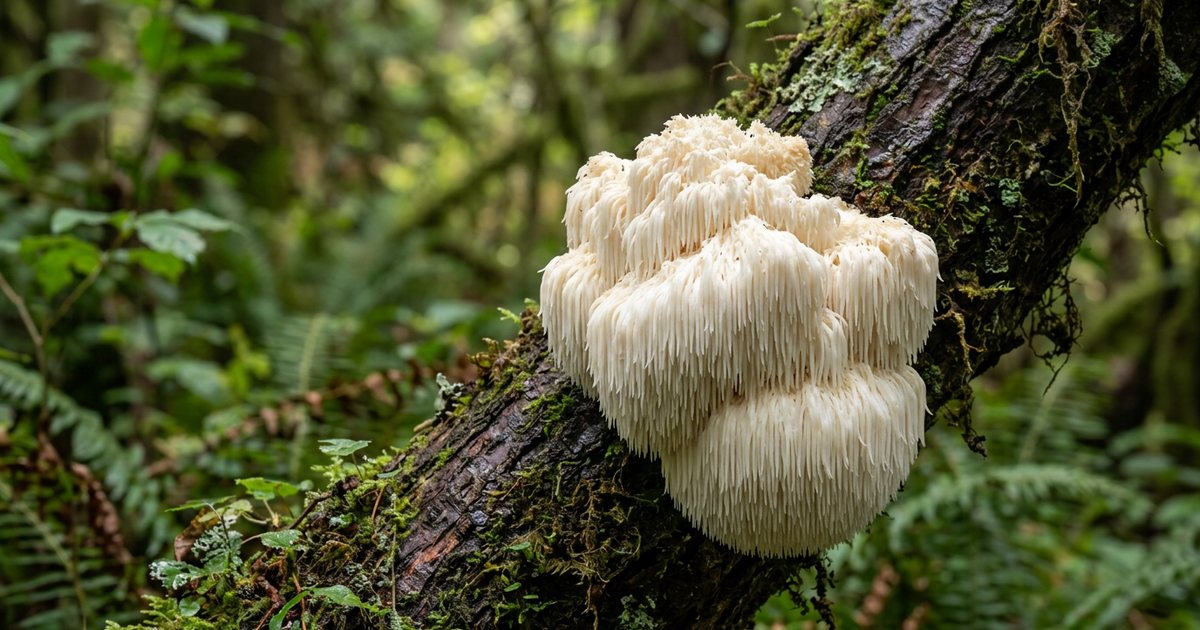
Lion’s mane is cultivated in two main ways. Log cultivation involves inoculating hardwood logs with lion’s mane spawn and letting the mushroom grow over months in conditions close to how it grows in the wild, slower, generally considered to produce a denser fruiting body, and more labor-intensive. Substrate cultivation grows the mushroom on sterilized grain, sawdust, or supplemented sawdust blocks in controlled indoor conditions, which is faster, more scalable, and now the dominant commercial method, particularly for supplement production where consistent, large-volume supply matters more than matching wild growing conditions exactly. No published study has compared hardwood-log cultivation against sawdust-block cultivation for finished compound content, so “log-grown” is not an evidence-backed quality tier. What the published work does show is that the substrate itself measurably changes the compound profile: fruiting bodies grown on beech sawdust accumulated more of most measured bioactive compounds than the same species grown on hemp straw[1], and adding olive mill solid waste to the substrate shifted hericenone content in the fruiting body and erinacerin content in the mycelium[2]. So how it was grown does appear to matter; the specific log-versus-bag comparison is the one nobody has run.
Fruiting Body vs. Mycelium: Why the Distinction Matters
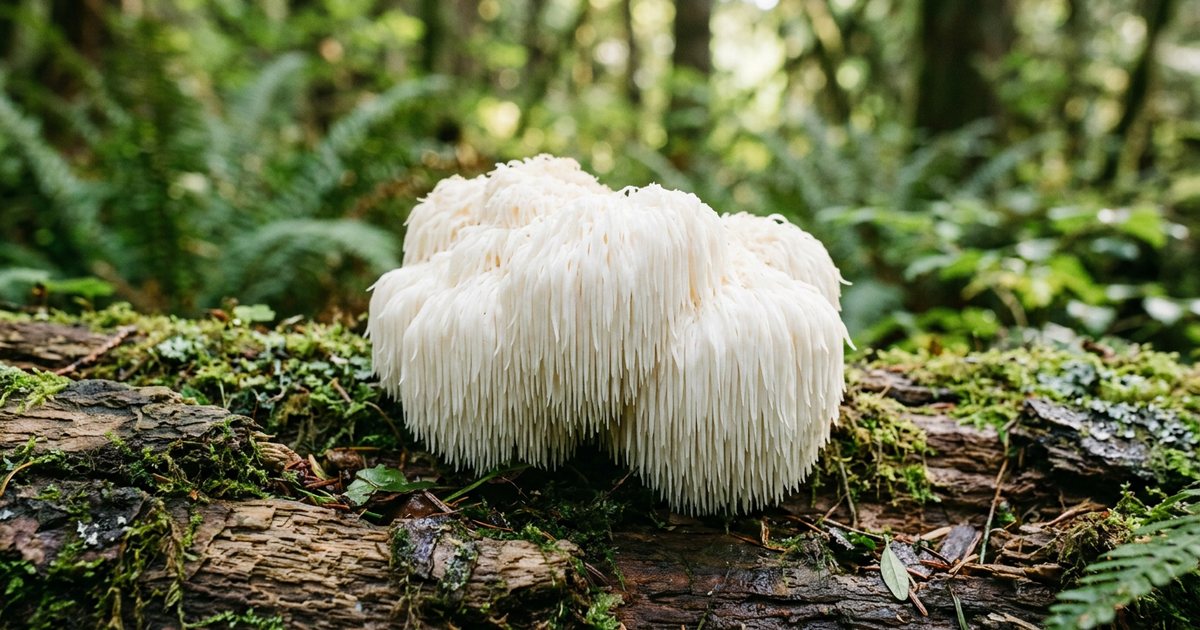
The fruiting body is the visible, harvestable mushroom, the part that looks like a white pom-pom or brain. The mycelium is the underground, thread-like network the fungus grows from, similar to a root system. Research has found the two contain different compound profiles: hericenones concentrate mainly in the fruiting body, while erinacines are found mainly in the mycelium[2], and in one analysis erinacines were not detectable in fruiting body tissue at all while the genes that make them were strongly expressed in mycelium[3]. That is a difference in which compound family dominates rather than a ranking, and no published study has compared total polysaccharide content between lion’s mane fruiting body and mycelium directly, so treat “higher polysaccharide” claims for either form as unverified. Some mycelium-based supplements are grown on grain substrate and then ground whole, meaning the finished product includes residual grain material along with the mycelium itself, something worth checking for on a label if avoiding grain fillers matters. The one functional-mushroom category where this has been analysed in detail in finished commercial products is chaga rather than lion’s mane, and there the mycelium-on-grain products tested starch-rich, with a beta-glucan measurement plus an iodine-starch test separating them from authentic fruiting-body material[4].
Extraction: Turning Raw Mushroom Into a Concentrated Extract
Because hericenones, erinacines, and polysaccharides are chemically different types of molecules, no single extraction solvent efficiently pulls out all of them. Hot water extraction, typically simmering dried, ground mushroom material in water for an extended period, is effective at pulling out beta-glucan polysaccharides, which are associated with immune-modulating research. Alcohol or ethanol extraction is more effective at pulling out the smaller hericenone and erinacine molecules linked to nerve growth factor research. Industrial extraction protocols for standardized products often run at sustained temperatures in the 80 to 98 degrees Celsius range for many hours, followed by filtering and concentrating the liquid down into a dried powder extract.
What “Dual Extract” Actually Means
A dual-extract product runs both a water extraction and an alcohol extraction, either on the same batch of material sequentially or as two separate extractions later combined, specifically to capture both compound families rather than favoring one. This is generally considered a more complete extraction approach than a single-method extract, though it does not automatically mean a higher concentration of any individual compound, that still depends on the raw material quality and the specific extraction parameters used.
Reading Extract Ratios and Standardization Claims
A ratio like “8:1” on a label indicates that roughly 8 units of raw mushroom material were used to produce 1 unit of finished extract, a rough proxy for concentration relative to using whole, unprocessed mushroom powder. These ratios are self-reported by manufacturers and not independently verified or standardized across the industry, so an 8:1 claim from one brand is not guaranteed to be equivalent to an 8:1 claim from another. A more specific and generally more trustworthy label claim is a stated percentage of a named compound, such as “beta-glucan minimum 20%,” which points to an actual measured constituent rather than a general concentration ratio.
Practical Takeaway
A dual-extract product using both fruiting body and mycelium, with a disclosed beta-glucan percentage and ideally third-party testing, represents the more complete and verifiable end of what is commercially available. A single-solvent extract or an undisclosed extraction method is not necessarily lower quality, but it does leave more label claims unverifiable.
Frequently Asked Questions
Is dual extract always better than a single extraction method?
It captures a broader range of compound families, which is generally considered more complete, but it does not guarantee a higher concentration of any specific compound; that depends on raw material and processing quality.
Is fruiting body extract better than mycelium extract?
They are different, not strictly better or worse. Hericenones concentrate in the fruiting body and erinacines in the mycelium, and one analysis found no detectable erinacines in fruiting body tissue at all. No published study has compared total polysaccharide content between the two directly, so a “higher polysaccharide” claim for either form should be treated as unverified. Quality varies significantly by manufacturer within both categories.
What does an extract ratio like 10:1 actually tell me?
It is a rough indicator of how much raw material went into the extract relative to the finished product, self-reported by the manufacturer. It is not independently standardized, so it should not be treated as a precise, comparable measurement across brands.
Is log-grown lion’s mane better than substrate-grown?
No published study has compared log-grown against substrate-grown lion’s mane for finished compound content, so log cultivation is not an evidence-backed quality tier, even though it is slower and closer to wild growing conditions. What has been measured is that the substrate itself changes the compound profile: fruiting bodies grown on beech sawdust accumulated more of most measured bioactive compounds than those grown on hemp straw, and substrate additives shifted hericenone and erinacerin content. So how it was grown does appear to matter; the log-versus-bag comparison specifically is the one nobody has run.
What should I look for on a lion’s mane label to judge quality?
A specified extraction method, a disclosed beta-glucan or other compound percentage rather than just an extract ratio, clarity on whether fruiting body, mycelium, or both were used, and evidence of third-party testing.
References
- Kała K, Cicha-Jeleń M, Sułkowska-Ziaja K, et al. Influence of Plant-Based Substrate Composition and Extraction Method on Accumulation of Bioactive Compounds in Hericium erinaceus (Bull.) Pers. Fruiting Bodies. Molecules (2025). PMID 40807268
- Khatib S, Pereman I, Kostanda E, et al. Olive mill solid waste induces beneficial mushroom-specialized metabolite diversity revealed by computational metabolomics strategies. Metabolomics (2025). PMID 40281221
- Doar E, Meyer KW, Bair ZJ, et al. Influences of substrate and tissue type on erinacine production and biosynthetic gene expression in Hericium erinaceus. Fungal Biol Biotechnol (2025). PMID 40181478
- Windsor C, Kreynes AE, Chilton JS, et al. Comparative Study of Chaga (Inonotus obliquus) Dietary Supplements Using Complementary Analytical Techniques. Int J Mol Sci (2025). PMID 40243601
These statements have not been evaluated by the FDA. This product is not intended to diagnose, treat, cure, or prevent any disease. This article is for informational purposes only and is not a substitute for professional medical advice. As an Amazon Associate we earn from qualifying purchases.
These statements have not been evaluated by the Food and Drug Administration. This information is not intended to diagnose, treat, cure, or prevent any disease. Content is for informational purposes only and is not medical advice; consult a qualified healthcare provider before starting any supplement. As an Amazon Associate we earn from qualifying purchases.